Continuing moronic statements by trolls on this blog and some no doubt military establishment-goaded television anchorpersons have forced me to address - hopefully for the last time - certain basic issues to do with the whole 'Raymond Davis' saga. Unfortunately, such is the deterioration of our national discourse and perhaps of our educational system that not only are people often unable to grasp simple arguments but are willing, immediately and without understanding the nuances of the points being made, to ascribe ulterior motives to anyone presenting facts that go against popular opinion. So for the sake of clarity, I will attempt to make my points as questions and answers in bullet form (no pun intended). Roughly the same questions have come up repeatedly in earlier comments.

1. Do I 'support' 'Raymond Davis'?
No. I hold no brief for him or others like him. Nor do I wish to see 'security contractors' / yahoos like him roaming around in Pakistan.
2. Do I think US interventionism is okay in Pakistan?
Personally, I think crying about US interference in Pakistan's affairs after the 'Raymond Davis' affair is not only cretinous but also hypocritical - there has been American interference in this country's internal affairs almost since it was created and which has been welcomed wholeheartedly by our establishment which benefits handsomely from it. Moreover, it will continue to benefit from it in the foreseeable future as well irrespective of the public stances it takes. Nevertheless, no, I don't think it has generally been a force for good in the past and it has usually been counter-productive in the present.
3. Do I want Raymond Davis to walk free after killing two Pakistanis and being involved in the death of a third?
It really does not matter what I, or anyone else, may want. There is a small issue of diplomatic conventions that Pakistan is a signatory to. If he does have diplomatic immunity, Pakistani courts cannot try him unless the US gives its consent. I do think he should have a fair trial for the killings but, if he does have diplomatic immunity, the best Pakistan can do is ask the Americans to try him in the US.
4. Am I still claiming 'Raymond Davis' has immunity after all that has come to light about him?
I am not claiming anything beyond pointing out what is already there in the legal conventions and whatever evidence has so far appeared. The basic question on which this hinges, as far as I can ascertain and as has been pointed out earlier, is whether 'Davis' was a member of the US Embassy staff in Islamabad - in which case the Vienna Convention on Diplomatic Relations of 1961 applies to him and he has blanket immunity - or a member of the US Consulate staff in Lahore - in which case the Vienna Convention on Consular Relations of 1963 applies to him and he does not have blanket immunity. That determination is, in my opinion, the main one that needs to be made.
5. But he's an acknowledged spy! And he is a contractor, not a diplomat!
As I pointed out in one of my earlier posts on this issue, long before the shocker (not!) of the acknowledgement that 'Davis' works for the CIA, it does not matter as far as the legal standing of diplomatic immunity is concerned. The Vienna Convention of 1961 (not the 1963 Convention on Consular Relations) grants the same privileges to an embassy's "technical and administrative staff" as diplomats. Of course there are spies working on 'cover posts' in all embassies and anyone who has any doubt should go ask the Pakistan Foreign Office about how many intelligence personnel are deputed in our foreign missions on cover posts. Should they all go round killing people and claiming immunity? And does diplomatic immunity confer the license to kill? Obviously not. But that doesn't change the legal position.
6. But what about Shah Mahmood Qureshi's claim that the Foreign Office had determined that 'Raymond Davis' did not have blanket immunity?
Mr. Qureshi or the Foreign Office has yet to state the evidence on which this claim was based. Indeed, the Foreign Office has yet to make that claim officially itself. They may have valid reasons, especially if the US had 1) not actually notified 'Davis' as a diplomat to the Foreign Office (contrary to what the Americans are now claiming which would mean also that their official letter is fabricated) or 2) If the US had notified him as attached to the Lahore Consulate rather than the Islamabad embassy. However, we have yet to hear of the reasoning. The Pakistan Foreign Office does indeed have the right to determine diplomatic status under Pakistan law, but obviously this has to be based on solid reasoning.
There have been some in the Pakistani press who have pointed to lacunae in the Pakistani law that the Foreign Office must 'approve' diplomatic status even after another state notifies someone as a diplomat (an approval that 'Davis' had apparently not received), and which do not grant diplomatic status to 'technical and administrative staff' of embassies. Moreover, they have claimed that Pakistani law takes precedence over international law (i.e. the Vienna Conventions). The Vienna Convention applicable to embassy staff (1961) itself only needs the 'sending' state to notify (there is no clause for approval) and, as pointed out before, applies equally to an embassy's technical and administrative staff. The common sense understanding of international law is that if a state ratifies an international treaty, it must ensure that its own laws comply with it. However, this is a matter of legal haggling and should this matter (of whether local law takes precedence over ratified international law) become a real issue, it would seem the International Court of Justice would have to be referred to, where in my humble opinion, if this is all that Pakistan's position is, its case would be weak.
7. Don't you think the US has been lying about 'Raymond Davis'? And don't you think the US media has been equally hypocritical by hiding facts it knew about him?
Yes and yes. Absolutely. The US government's response in the immediate aftermath of the incident was especially muddled and led to suspicions in the minds of most Pakistanis that it was trying to hide its guilt (which it probably was). The US media's capitulation to American government pressure to withhold information about 'Davis'' real activities has been particularly shameful. The Pakistani media should not be emulating it.
8. Don't you think there is more to this issue than what we already know?
Almost certainly. My analysis is based purely on what is already in the public domain. But it needs to be pointed out that so are the claims of almost everyone else in the media and my criticism of some of them is predicated on simply pointing out the flaws in their arguments.
9. So what should Pakistan have done? Do you want Pakistan to take this lying down?
There were a couple of recourses available to Pakistan before this sorry saga unfolded. One, it should not have given 'Raymond Davis' a visa if it had any doubts about him. Even after it granted him a visa, it could have expelled him from the country if it found his activities incompatible with diplomatic norms. However, if 'Davis' indeed has diplomatic immunity, all it can do now - aside from asking the US to lift it - is to declare him persona non grata and expel him and request the US to try him in its courts.
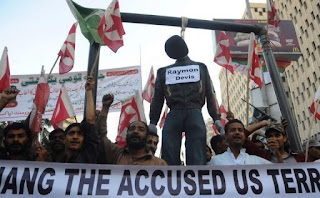
What we are seeing, unfortunately, is a whipping up of emotionalism and fanciful conspiracy theories to cover up the dire incompetence and / or collusion of our security services. There are claims now that the visas were granted without proper checks because the security services were cut out of the loop in foreign capitals by the political establishment. First of all, if this is even true, why was this not raised as an issue at the time? 'Davis'' first visa was issued in 2009. He received two subsequent visas in 2010, both from Islamabad. Were our security services sleeping? Or are they so riddled with bureaucracy that their flagging of a violation of norms took until 2011 to trickle up to the relevant officers?
Secondly, even if one accepts that our security services were cut out of the loop in the grant of visas, what about the entire time 'Davis' and others like him were living in Pakistan and conducting their "subversive" activities? Are we to take it that, in the almost two years he kept coming in and out of Pakistan, our intelligence was so incompetent that it never once spotted his activities and flagged them? Shouldn't they have paid particular attention to people who allegedly bypassed normal security clearances? It would seem that all this hoopla now is to cover up the fact that our security services had dropped the ball.
We are now hearing all sorts of stories about 'Davis' - from the silly story in The News by Marianna Babar about his addiction to niswar (as if chewing tobacco or snuff is a rarity among US servicemen particularly from areas like Virginia state), to claims in the Express Tribune that 'Davis' was orchestrating bombings by the Pakistani Taliban (sourced to anonymous intelligence personnel) to claims on Geo and in The Nation (sourced from some alleged Russian intelligence report) that he was involved in supplying nuclear material to Al Qaeda in order to frame Pakistan. We should be clear about one thing. Regardless of the authenticity (or likely not) of these stories, they are basically a smokescreen that obscure the real issues of this case. They matter not a whit in whether 'Raymond Davis' is tried in Pakistan or whether we are forced to expel him without a trial.
10. Should Pakistan reassess its ties with US intelligence and its covert operations programme?
By all means. But Pakistan's establishment should do so in a cool, logical manner, having weighed the consequences of its actions. This should not be done by whipping public opinion into a frenzy through post-facto planting of stories and side-tracking issues. You want to kick out Xe (nee Blackwater) operatives from Pakistan? Absolutely do so. Why wait until they cause damage?
Footnote: You may want to read this piece from Foreign Policy that came in as I was writing. It deals with what may have allegedly been agreed between the Pakistani and American military's top officials particularly regarding this case in a closed-door meeting in Oman yesterday. If this report is correct, you may actually very soon see a complete change of tone in the media as well.

The man known as Raymond Davis in custody
1. Do I 'support' 'Raymond Davis'?
No. I hold no brief for him or others like him. Nor do I wish to see 'security contractors' / yahoos like him roaming around in Pakistan.
2. Do I think US interventionism is okay in Pakistan?
Personally, I think crying about US interference in Pakistan's affairs after the 'Raymond Davis' affair is not only cretinous but also hypocritical - there has been American interference in this country's internal affairs almost since it was created and which has been welcomed wholeheartedly by our establishment which benefits handsomely from it. Moreover, it will continue to benefit from it in the foreseeable future as well irrespective of the public stances it takes. Nevertheless, no, I don't think it has generally been a force for good in the past and it has usually been counter-productive in the present.
3. Do I want Raymond Davis to walk free after killing two Pakistanis and being involved in the death of a third?
It really does not matter what I, or anyone else, may want. There is a small issue of diplomatic conventions that Pakistan is a signatory to. If he does have diplomatic immunity, Pakistani courts cannot try him unless the US gives its consent. I do think he should have a fair trial for the killings but, if he does have diplomatic immunity, the best Pakistan can do is ask the Americans to try him in the US.
4. Am I still claiming 'Raymond Davis' has immunity after all that has come to light about him?
I am not claiming anything beyond pointing out what is already there in the legal conventions and whatever evidence has so far appeared. The basic question on which this hinges, as far as I can ascertain and as has been pointed out earlier, is whether 'Davis' was a member of the US Embassy staff in Islamabad - in which case the Vienna Convention on Diplomatic Relations of 1961 applies to him and he has blanket immunity - or a member of the US Consulate staff in Lahore - in which case the Vienna Convention on Consular Relations of 1963 applies to him and he does not have blanket immunity. That determination is, in my opinion, the main one that needs to be made.
5. But he's an acknowledged spy! And he is a contractor, not a diplomat!
As I pointed out in one of my earlier posts on this issue, long before the shocker (not!) of the acknowledgement that 'Davis' works for the CIA, it does not matter as far as the legal standing of diplomatic immunity is concerned. The Vienna Convention of 1961 (not the 1963 Convention on Consular Relations) grants the same privileges to an embassy's "technical and administrative staff" as diplomats. Of course there are spies working on 'cover posts' in all embassies and anyone who has any doubt should go ask the Pakistan Foreign Office about how many intelligence personnel are deputed in our foreign missions on cover posts. Should they all go round killing people and claiming immunity? And does diplomatic immunity confer the license to kill? Obviously not. But that doesn't change the legal position.
6. But what about Shah Mahmood Qureshi's claim that the Foreign Office had determined that 'Raymond Davis' did not have blanket immunity?
Mr. Qureshi or the Foreign Office has yet to state the evidence on which this claim was based. Indeed, the Foreign Office has yet to make that claim officially itself. They may have valid reasons, especially if the US had 1) not actually notified 'Davis' as a diplomat to the Foreign Office (contrary to what the Americans are now claiming which would mean also that their official letter is fabricated) or 2) If the US had notified him as attached to the Lahore Consulate rather than the Islamabad embassy. However, we have yet to hear of the reasoning. The Pakistan Foreign Office does indeed have the right to determine diplomatic status under Pakistan law, but obviously this has to be based on solid reasoning.
There have been some in the Pakistani press who have pointed to lacunae in the Pakistani law that the Foreign Office must 'approve' diplomatic status even after another state notifies someone as a diplomat (an approval that 'Davis' had apparently not received), and which do not grant diplomatic status to 'technical and administrative staff' of embassies. Moreover, they have claimed that Pakistani law takes precedence over international law (i.e. the Vienna Conventions). The Vienna Convention applicable to embassy staff (1961) itself only needs the 'sending' state to notify (there is no clause for approval) and, as pointed out before, applies equally to an embassy's technical and administrative staff. The common sense understanding of international law is that if a state ratifies an international treaty, it must ensure that its own laws comply with it. However, this is a matter of legal haggling and should this matter (of whether local law takes precedence over ratified international law) become a real issue, it would seem the International Court of Justice would have to be referred to, where in my humble opinion, if this is all that Pakistan's position is, its case would be weak.
7. Don't you think the US has been lying about 'Raymond Davis'? And don't you think the US media has been equally hypocritical by hiding facts it knew about him?
Yes and yes. Absolutely. The US government's response in the immediate aftermath of the incident was especially muddled and led to suspicions in the minds of most Pakistanis that it was trying to hide its guilt (which it probably was). The US media's capitulation to American government pressure to withhold information about 'Davis'' real activities has been particularly shameful. The Pakistani media should not be emulating it.
8. Don't you think there is more to this issue than what we already know?
Almost certainly. My analysis is based purely on what is already in the public domain. But it needs to be pointed out that so are the claims of almost everyone else in the media and my criticism of some of them is predicated on simply pointing out the flaws in their arguments.
9. So what should Pakistan have done? Do you want Pakistan to take this lying down?
There were a couple of recourses available to Pakistan before this sorry saga unfolded. One, it should not have given 'Raymond Davis' a visa if it had any doubts about him. Even after it granted him a visa, it could have expelled him from the country if it found his activities incompatible with diplomatic norms. However, if 'Davis' indeed has diplomatic immunity, all it can do now - aside from asking the US to lift it - is to declare him persona non grata and expel him and request the US to try him in its courts.

Everybody hates 'Raymond'
What we are seeing, unfortunately, is a whipping up of emotionalism and fanciful conspiracy theories to cover up the dire incompetence and / or collusion of our security services. There are claims now that the visas were granted without proper checks because the security services were cut out of the loop in foreign capitals by the political establishment. First of all, if this is even true, why was this not raised as an issue at the time? 'Davis'' first visa was issued in 2009. He received two subsequent visas in 2010, both from Islamabad. Were our security services sleeping? Or are they so riddled with bureaucracy that their flagging of a violation of norms took until 2011 to trickle up to the relevant officers?
Secondly, even if one accepts that our security services were cut out of the loop in the grant of visas, what about the entire time 'Davis' and others like him were living in Pakistan and conducting their "subversive" activities? Are we to take it that, in the almost two years he kept coming in and out of Pakistan, our intelligence was so incompetent that it never once spotted his activities and flagged them? Shouldn't they have paid particular attention to people who allegedly bypassed normal security clearances? It would seem that all this hoopla now is to cover up the fact that our security services had dropped the ball.
We are now hearing all sorts of stories about 'Davis' - from the silly story in The News by Marianna Babar about his addiction to niswar (as if chewing tobacco or snuff is a rarity among US servicemen particularly from areas like Virginia state), to claims in the Express Tribune that 'Davis' was orchestrating bombings by the Pakistani Taliban (sourced to anonymous intelligence personnel) to claims on Geo and in The Nation (sourced from some alleged Russian intelligence report) that he was involved in supplying nuclear material to Al Qaeda in order to frame Pakistan. We should be clear about one thing. Regardless of the authenticity (or likely not) of these stories, they are basically a smokescreen that obscure the real issues of this case. They matter not a whit in whether 'Raymond Davis' is tried in Pakistan or whether we are forced to expel him without a trial.
10. Should Pakistan reassess its ties with US intelligence and its covert operations programme?
By all means. But Pakistan's establishment should do so in a cool, logical manner, having weighed the consequences of its actions. This should not be done by whipping public opinion into a frenzy through post-facto planting of stories and side-tracking issues. You want to kick out Xe (nee Blackwater) operatives from Pakistan? Absolutely do so. Why wait until they cause damage?
Footnote: You may want to read this piece from Foreign Policy that came in as I was writing. It deals with what may have allegedly been agreed between the Pakistani and American military's top officials particularly regarding this case in a closed-door meeting in Oman yesterday. If this report is correct, you may actually very soon see a complete change of tone in the media as well.


 Posts
Posts

